-
Technology
-
Industry
-
Solutions
-
- ASSET MANAGEMENT
- AUGMENTED & VIRTUAL REALITY
- COLLABORATION
- CONVERSATIONAL
- CUSTOMER EXPERIENCE MANAGEMENT
- CUSTOMER RELATIONSHIP MANAGEMENT
- CYBER SECURITY
- DATA CENTER
- DIGITAL CUSTOMER EXPERIENCE
- DOCUMENT MANAGEMENT
- EHS SOFTWARE
- ELECTRONIC DATA INTERCHANGE
- ENTERPRISE DATA MANAGEMENT
- ENTERPRISE DATA QUALITY MONITORING
- ENTERPRISE RESOURCE PLANNING
- ENTERPRISE RISK MANAGEMENT
- ENTERPRISE-GRADE WEB DATA SOLUTIONS
- FACILITY MANAGEMENT
- FIELD SERVICE
- GAMIFICATION
- IDENTITY AND ACCESS MANAGEMENT
- INFRASTRUCTURE
- IT SERVICE MANAGEMENT
- MANAGED IT SERVICES
- PAYMENT AND CARD
- PROJECT MANAGEMENT
- SOFTWARE TESTING
- STORAGE
- VIDEO SOLUTIONS
- WORKFLOW
-
-
Platforms
-
Functions
- Leadership Perspectives
- Innovation Insights
- Research
- Magazines
- News
- CXO Awards


Education : Minga

Do Schools Need to Revisit How They Run Their Campus?
Jason Richards, Founder & CEO
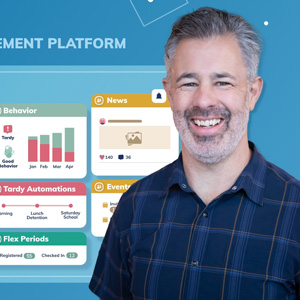
Jason Richards, Founder & CEO, Minga
In the rapidly changing realm of K12 education, the push towards digital transformation is not merely trendy but imperative. Yet, as we march towards this digital future, a critical question looms: Are we truly optimizing the way our campuses operate, or are we merely digitizing things just to keep up with trends? Any type of digital transformation needs to serve the people who are going to be using the tech, otherwise there is no point in digitizing.
In recent years, software solutions such as Student Information Systems (SIS) and Learning Management Systems (LMS) have progressed by leaps and bounds. Student Information Systems help admins streamline student records and improve accuracy, while dynamic Learning Management Systems help improve the classroom experience. Important as this software is, SIS and LMS doesn’t fully address the main problem: the overwhelming amount of admin work that slows down our teachers. This is exactly why the concept of a Campus Management Platform is so important — it allows educators to regain focus on their primary role: teaching.
Effective EdTech: It's About Solving Real Daily Problems, Not Just Rolling Out Technology for the Sake of it
Our modern day thinking often suggests that more technology equals better management. But this mentality is flawed. It's not about having more digital tools; it's about having a consolidated toolset that address the real pain points of campus operations. And for a lot of K12 schools across the country, the biggest pain point is dealing with mountains of paper and drowning in spreadsheets that are completely inefficient.
We need to move educators and administrators away from the administrative processes of yesteryear and into the 21st century. The admin grind needs to be replaced with more effective ways of handling things like tardies to hall passes. Whenever a teacher handwrites a hall pass or manually records a tardy, precious time gets stolen from the school day. This time could be far better spent on student engagement and academic nurturing.
 The path to educational excellence isn't paved with gadgets and apps but with the thoughtful integration of technology that serves our ultimate goal: keeping students engaged, educators empowered, and communities connected.
These administrative headaches are felt across thousands of schools across the country every single day. Consider the day in the life of a Dean of Students who is bogged down by the management of tardies and unable to devote her time to overseeing the broader spectrum of student achievement. She spends the whole day head down in binders and paper-pushing, which is a complete waste of talent and resources. This systemic issue continues to plague educational institutions across the U.S. where operational inefficiencies not only sap staff time but also dampen student engagement.
Schools Need an Integrated Set of Digital Tools That Bridge the Gap in Campus Operations
An all-in-one Campus Management Platform (CMP) offers a glimmer of hope, promising to bridge the operational gap with a suite of tools designed for the modern educational landscape. But it's more than just a promise of efficiency; it's a call to realign our priorities, ensuring that every technological adoption brings us closer to the core mission of education: to teach, to engage, and to inspire.
Safety and security, student behavior and rewards, communication and engagement — these aren't just operational components; they're the pillars of a thriving educational ecosystem. A digital platform that seamlessly integrates these aspects can indeed transform campus operations.
But the question remains: Are we ready to embrace this change, not just as an administrative upgrade but as a philosophical shift towards a more holistic educational approach?
Technology Has the Potential to Build Thriving School Communities
As more schools consider the adoption of Campus Management Platforms, the conversation must go beyond mere features and functionalities. It's about envisioning a future where technology doesn't just automate tasks but also elevates the entire educational journey for all stakeholders involved: admins, teachers, students, and parents. It's about creating a campus that's not just efficient and secure but also vibrant and inclusive.
In rethinking campus operations, we must challenge the status quo, asking not just how we can do things differently, but how we can do them better. The path to educational excellence isn't paved with gadgets and apps but with the thoughtful integration of technology that serves our ultimate goal: keeping students engaged, educators empowered, and communities connected.
The future of managing campuses holds incredible promise. Yes, technology is a great enabler, but we must remember that embracing tech is about more than just new gadgets. Effectively tackling the headaches that surround school administration ultimately leads to a more engaging, efficient, and student-centered learning environment.

News
Latest Issues


